


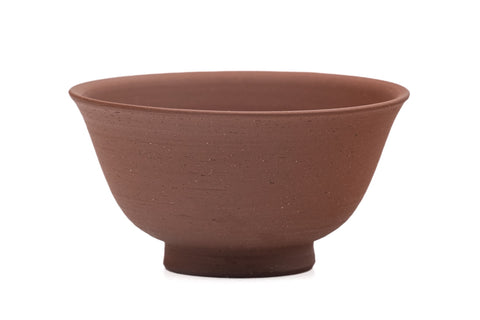

Hon-Shudei Senchawan - 50ml
Maekawa JunzōThis delicate and elegant senchawan (sencha cup) is made from hon-shudei (本朱泥) clay, the original unblended version of the iconic Tokoname shudei (朱泥) clay, known for its brick-red colour and ability to subtly reduce the astringency of tea. Compared to the modern blended varieties, hon-shudei has a softer colour and coarser texture. With a classic tulip shape and a modest 50ml capacity, this cup is ideal for savouring high-grade sencha, though can be used for any purpose.
Made in Japan. Ships from the United States.
Width: 7 cm (2.8 in)
Height: 3.5 cm (1.4 in)
Capacity: 50 ml
Tokoname-yaki (常滑焼) is a type of Japanese pottery that traditionally comes from Tokoname in Aichi Prefecture, Japan. The site of one of Japan’s Six Ancient Kilns, pottery has been made in Tokoname since the 12th century.
Today, Tokoname ware is known for its iconic brick-red clay called shudei. Famously used in teaware and bonsai pots, this clay’s vibrant colour comes from its rich iron content. Tea steeped in unglazed Tokoname teapots is said to have a mellower taste.

Hon-shudei (本朱泥) translates to 'real vermillion clay' or 'original vermillion clay' and refers to the traditional clay used to make high-quality teaware in Tokoname, originally in imitation of Chinese red clays like those found in Chauzhou. The modifier 'original' is required because the vast majority of red shudei teapots produced in Tokoname today use modern blended clay which is tinted red with the addition of iron oxide.
The original shudei is naturally yellow in colour, only attaining its eponymous hue when fired in oxidation. During this firing, the iron in the clay reacts with the oxygen in the air, producing the vibrant rust-red colour. As this colour is naturally occurring, hon-shudei wares tend to vary significantly in their exact hue and generally have a softer, more subdued red than the modern blended clays.
Hon-shudei is also known for its porosity, which while not as extreme as the Chinese Chouzhou clay it seeks to replicate, does have a gentle softening effect on tea brewed in hon-shudei kyusu.

Maekawa Junzō (前川淳蔵) was born in 1976 and is one of Tokoname's younger kyusu craftsmen. With a background in engineering, Maekawa-san is known for producing functional wares and experimenting with clays and glazes. He is the fourth generation owner of Kenzan Kiln (賢山窯).
