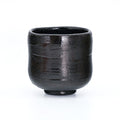
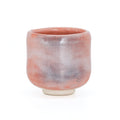
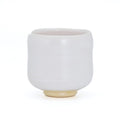
Kuro-raku (黒楽) or black Raku is the most famous style of Raku pottery. One of Japan's most recognisable ceramic traditions, Raku-yaki (楽焼) or Raku ware was developed by famous tea master Sen-no-Rikyū in the late 16th century. Perhaps inspired by the recently developed 引き出し黒 (hikidashi-guro) technique used to produce the Seto-guro style of black chawan, Rikyū collaborated with tile-maker Chōjirō to produce a new style of ware for use in the tea ceremony.
Hand-formed from porous clay rather than wheel-thrown, raku chawan are then bisque-fired, glazed, and then fired individually or in small batches for a short amount of time at relatively low temperatures before finally being removed from the kiln while still glowing hot. The resulting bowls are very light and porous - imperfect in both shape and construction. Unlike porcelain or high-fired stoneware bowls which produce a high-pitched, bell-like ring when tapped, raku bowls are so low-fired that they only produce a dull thud.
The vast majority of raku chawan are made in the hantsutsu-gata shape, and are generally circular, with naturalistic imperfections, rather than intentional distortions.
Originally, raku chawan were always undecorated, as, in Rikyū’s eyes, decoration is an unnecessary artifice that distracts from the pure elegance of raku bowls’ simplicity. Today, however, it is not uncommon to find painted or otherwise decorated raku chawan.
When first made, these bowls may have been called Juraku-yaki (聚楽焼) as they were fired on the grounds of Hideyoshi’s Jurakudai palace (聚楽第). Hideyoshi gave both the wares the seal of ‘Raku’ (楽) meaning ‘enjoyment, and gave this name to Chōjirō himself as well. The descendants of Chōjirō continue to bear the family name Raku and still produce raku chawan to this day.
It is worth noting that ‘raku’ in the realm of western ceramics arts, refers to a derivative, but separate practice.
The organic shapes, rough textures, and natural imperfections of this style made Raku pottery almost synonymous with wabicha and the later term "wabi-sabi".
Pictured here is Omokage (面影), one of the original Kuro-raku chawan.