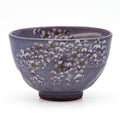
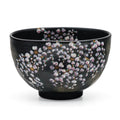
Black Weeping Sakura Chawan

Murakami Iku
★★★★★ (3)
Regular price $124.00
Description

This elegant Kyo-yaki chawan (matcha bowl) has a fun spin on a classic shape with a subtly flattened front and faceted bottom. Atop the red clay, this chawan has a matte black glaze, decorated with hand-painted shidarezakura (枝垂れ桜 - weeping cherry blossoms) on the face and on the inside.

Specifications

Made in Japan. Ships from the United States.

Width: 12 cm (4.7 in)
Height: 7.8 cm (3.1 in)

Please note that due to the organic nature of hand-throwing, glazing, and painting, there are subtle variations between pieces, with each bowl being slightly unique in shape and design.

Kyō-yaki (京焼) is a type of Japanese pottery that traditionally comes from Kyoto, Japan. The pottery traditions of Kyoto date back to the 5th century and are varied in their styles. The styles most associated with modern kyō-yaki production began during the 1600s when Nonomura Ninsei perfected his overglaze technique, leading to the elegantly decorated, multi-coloured wares that Kyoto has come to be famous for.

There are many styles of chawan produced in the Kyōto area and few are as synonymous with the term Kyō-yaki (京焼 - Kyōto wares) as the colourful overglaze painted styles. While there is no agreed upon term for the general Kyōto style, the term iro-e ( 色絵 - colourful paintings) refers to the technique of overglaze painting. Unlike the painted styles detailed above which used iron pigments applied underneath a transparent glaze, overglaze decoration uses enamels applied on top of the glaze. This allows for much more colourful and detailed designs and images. The development of this style can be traced to three individual potters. Nonomura Ninsei (野々村仁清) and his student Ogata Kenzan (尾形 乾山) pioneered the style in the early-mid Edo period. Later in the 1700s, Okuda Eisen (奥田頴川) introduced porcelain technology to Kyōto which made overglaze painting easier.

Iro-e

Murakami Iku (村上郁) of Fukuiku Kiln (馥郁窯) has over 45 years of experience, and now creates his wares in Sumiyama, a mountainous pottery village on the outskirts of Kyoto. He specialises in hand-painted wares alongside mishima styles.

Murakami-san standing in front of a display of ceramic items in his store.

★★★★★
★★★★★
★★★★★
★★★★★