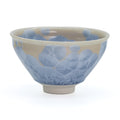
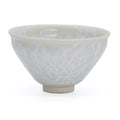
This chawan (matcha bowl) has a classic tenmoku shape and is glazed in Touan's signature hanakessho (花結晶 - flower crystal) glaze. The pearlescent silvery white crystals add an entrancing depth to warm white glaze, while still highlighting the colour of the tea.
Please note: Variation in crystal distribution, color tone, pattern density, and overall appearance is expected with handmade hanakessho glaze teaware.
Specifications
Made in Japan. Ships from the United States.
Width: 12 cm (4.7 in)
Height: 7.1 cm (2.8 in)
Please note that due to the organic nature of handmade hanakessho teaware, there will be variations between pieces.
Kyō-yaki Ceramics
Kyō-yaki (京焼) is a type of Japanese pottery that traditionally comes from Kyoto, Japan. The pottery traditions of Kyoto date back to the 5th century and are varied in their styles. The styles most associated with modern kyō-yaki production began during the 1600s when Nonomura Ninsei perfected his overglaze technique, leading to the elegantly decorated, multi-coloured wares that Kyoto has come to be famous for.
About Tenmoku
As one of the oldest styles of tea bowl, tenmoku (天目) are considered the most formal and revered tea bowls. Despite being known by their Japanese name, the original Tenmoku bowls came from Song Dynasty China (960–1279). When Japanese monks visited the Buddhist temples of Tian Mu Mountain (天目山 - tian mu zhan in Chinese) and learned about Chinese whisked tea culture, they brought some of their shallow, conical, black-glazed bowls back to Japan, calling them 天目 after the mountain where they encountered them. In modern Japanese, these characters are read as 'tenmoku' which is where we get the name. The original tenmoku bowls are all relatively consistent in shape and size. They have a deep, conical shape with a groove around the lip, and a small foot.
The term 'tenmoku' can be confusing, as it has referred to different aspects of these bowls over the centuries. Originally, 'tenmoku'-style bowls were referred to as chasan (茶盞), with the most esteemed of these being the kensan (建盞): bowls fired in Jianyian Kiln in Fujian. These kensan were further classified into three main glaze types:
-Nogime (禾目- hare’s fur): the most common; streaks of blue or rust red
-Yuteki (油滴 - oil-spot): small spots against a dark backdrop
-Yōhen (曜変- glittering change): large silvery spots surrounded by iridescence
The next category of chasan after kensan were the tenmoku: a term originally used to refer to bowls that were like kensan but fired in other kilns in China (or even Japan).
However, over time, the terms evolved and now tenmoku is used as the standard term for all of these conical, dark-glazed bowls, and any bowls made in this style. Confusingly, in addition to the original chawan and imitations of them, the term tenmoku can also refer solely to the shape of these bowls, or their various beautiful, metallic glazes.
Meet Touan (陶葊)About the Artist
Founded in 1922 at HIgashiyama Senyū-ji Temple, Touan has since become one of the largest Kyo-yaki and Kiyomizu-yaki producers, with over 20 artisans hand-crafting and painting each piece. In contrast to the standard overglaze painting technique that Kyoto ceramics are known for, Touan has developed an underglaze technique that produces the same vibrant colours and delicate lines, but is more durable due to the glaze being layered on top of the painting.
Touan is headed by fourth generation potter Dobuchi Yoshiaki (土渕善亜貴) who is known for his stunning developments in glazing, creating Touan's new signature crystal flower glaze. Additionally, he is one of only a handful of potters who has successfully replicated the elusive yōhen tenmoku glaze.